Before your first appointment, also read how to prepare for permanent makeup. Preparation before treatment and aftercare serve different purposes.
Lip blush healing: what to expect
The colour immediately after lip pigmentation is not the final result. This guide explains changes during recovery, questions to ask about aftercare and when to seek help.
Key points
Pay attention to whether discomfort is improving, not just to colour. Peeling does not automatically mean all pigment has been lost. Increasing pain should not be dismissed as routine healing.
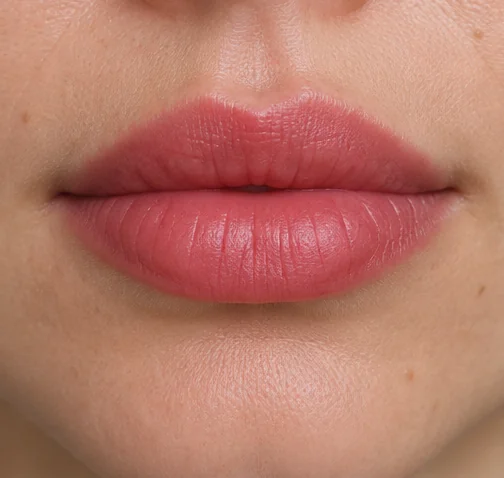 Day 1
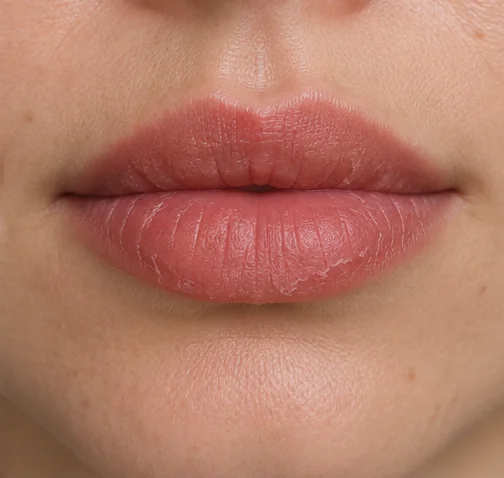 Day 3
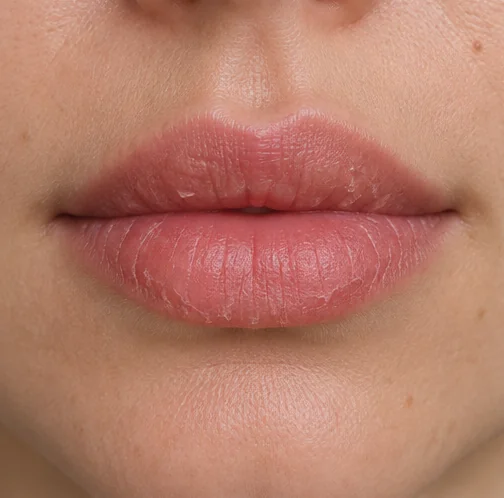 Day 7
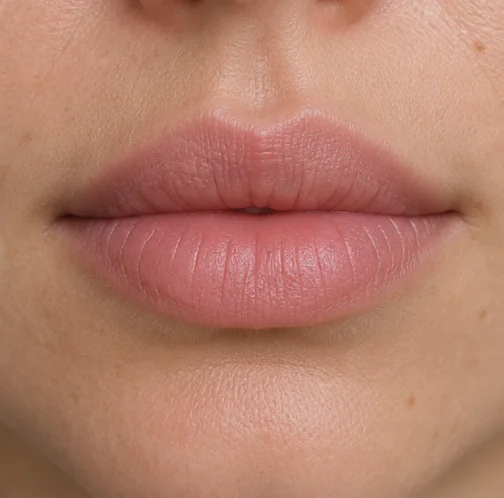 Day 10
Healing day by day: why there is no universal calendar
Recovery varies between people. Stages are a guide, not a promise that your lips will match another person’s photo on a particular day. A surface that looks better is not necessarily ready for assessment of the final colour. Do not schedule an important event around a guaranteed recovery in just a few days.
Immediately afterwards: stronger colour and sensitivity
Fresh pigmentation can look stronger than the intended healed result. Sensitivity and swelling may affect how the shape looks. A photo taken on the treatment day does not show healed results. Avoid judging final symmetry or deciding on a touch-up from that photo alone. Severe or rapidly increasing swelling needs medical assessment.
Peeling and lighter colour
Pigmented skin may flake while healing. Do not pick flakes or scabs or use an exfoliant to smooth the surface. A lighter or uneven appearance during recovery does not establish how much pigment will remain. Nor can anyone promise that every pale patch will even out on its own.
Has the colour disappeared?
Take unfiltered photos in similar lighting rather than comparing different lighting every day. Record the treatment date and any concerning changes. Assess colour and the need for a touch-up after recovery at a review agreed with your practitioner. A touch-up should not cover unexplained irritation, lesions or infection.
Cleaning and keeping lips moisturised
In my aftercare guidance, avoid wetting your lips during the first 24 hours: skip the pigmented area when washing your face. Afterwards, clean gently with water without rubbing or scrubbing. Do not exfoliate or pick flakes. If your lips become dirty or develop discharge, contact me for cleaning advice rather than leaving contamination on the skin.
Keep lips regularly moisturised and protected from drying out. A thin layer of petroleum jelly or a product selected for post-treatment care may be used according to individual instructions. Wash your hands and use a clean disposable applicator. This does not mean keeping a thick layer of ointment on at all times. Do not add herbal or medicated products yourself.
Not sure where to start? Book a cosmetic consultation, which is completely free if you decide to have any treatment during the same visit!
Food, drinks and activity
Avoid hot food and drinks for the first 24 hours. Choose lukewarm options; a straw may reduce contact with the lips but does not make hot drinks safe. My guidance excludes swimming pools, sauna, strength training and kissing during healing, usually around 7-10 days, until flakes shed naturally and the surface has recovered. If healing takes longer, reaching day ten alone is not a reason to resume these activities.
Colour changes I see in practice
Colour may be very intense on day one and appear even stronger on day two, then gradually lighten. Fine flakes or crusts may appear around days 2-3 and resolve around days 7-10. Do not pick them. By day ten the appearance may be calmer, but colour is assessed after recovery, usually around a month after treatment. These are approximate stages, not a promise of an identical recovery for everyone.
Cold sores: discuss prevention beforehand
Tell me before treatment if you have a history of cold sores and discuss the need for antiviral prevention with a doctor. The doctor determines the medicine, start time and duration. This guide does not recommend a mandatory Heviran course for everyone. Blisters, burning or other cold sore symptoms after treatment call for medical advice and informing me.
When to seek medical attention
Worsening pain, spreading redness, pus, fever or chills require prompt medical attention. Difficulty breathing or sudden severe swelling requires emergency help. Inform your practitioner too, but do not wait for their reply if medical care is needed. These warning signs are described by the American Academy of Dermatology for tattoo reactions.
Considering the treatment?
Find the treatment description, portfolio and booking information on our permanent lip makeup page. This guide focuses on recovery; individual aftercare follows your assessment and treatment.
Sources and scope
AAD: tattoo skin reactions and FDA: tattoos and permanent makeup cover general risks and warning signs. They are not a lip-specific healing calendar or validation of an individual salon protocol. This guide does not replace medical assessment.
Lip healing questions
Does lighter colour mean the treatment failed?
This cannot be decided during recovery alone. Discuss the healed result rather than judging a single photo.
Can I speed up peeling?
Do not pick flakes or scabs. Follow your aftercare instructions.
Do all lips heal the same way?
No. Descriptions and photographs illustrate possible stages, not a universal calendar.